Airsoft Sights Explained: Red Dots, Holographics, Magnifiers and Scopes
A good sight makes you faster and more accurate, and it is one of the most popular first upgrades in airsoft. But with red dots, holographics, magnifiers and scopes all on offer, which one suits you? Here is how each works, who they are for, and how to set them up properly.
Do you even need a sight?
Airsoft BBs follow a curved path and have a practical range of around 50 to 70 metres for most AEGs. Many skilled players use iron sights, or simply track their BBs. But a good optic helps you acquire targets faster, especially in shaded woodland, and makes the gun feel far more natural to shoulder. Our iron sights range is a good starting point if you want to keep it simple.
Red dot sights
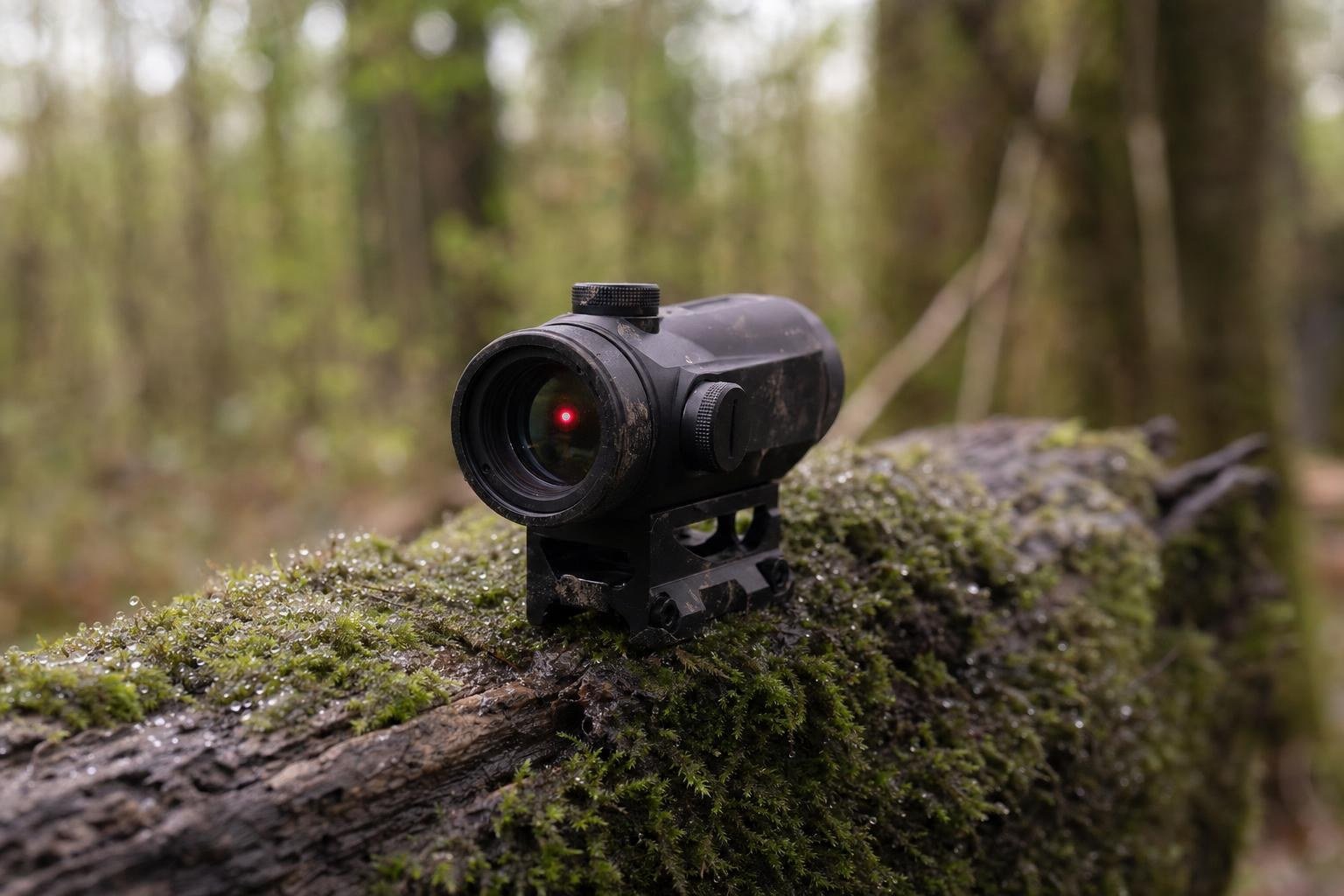
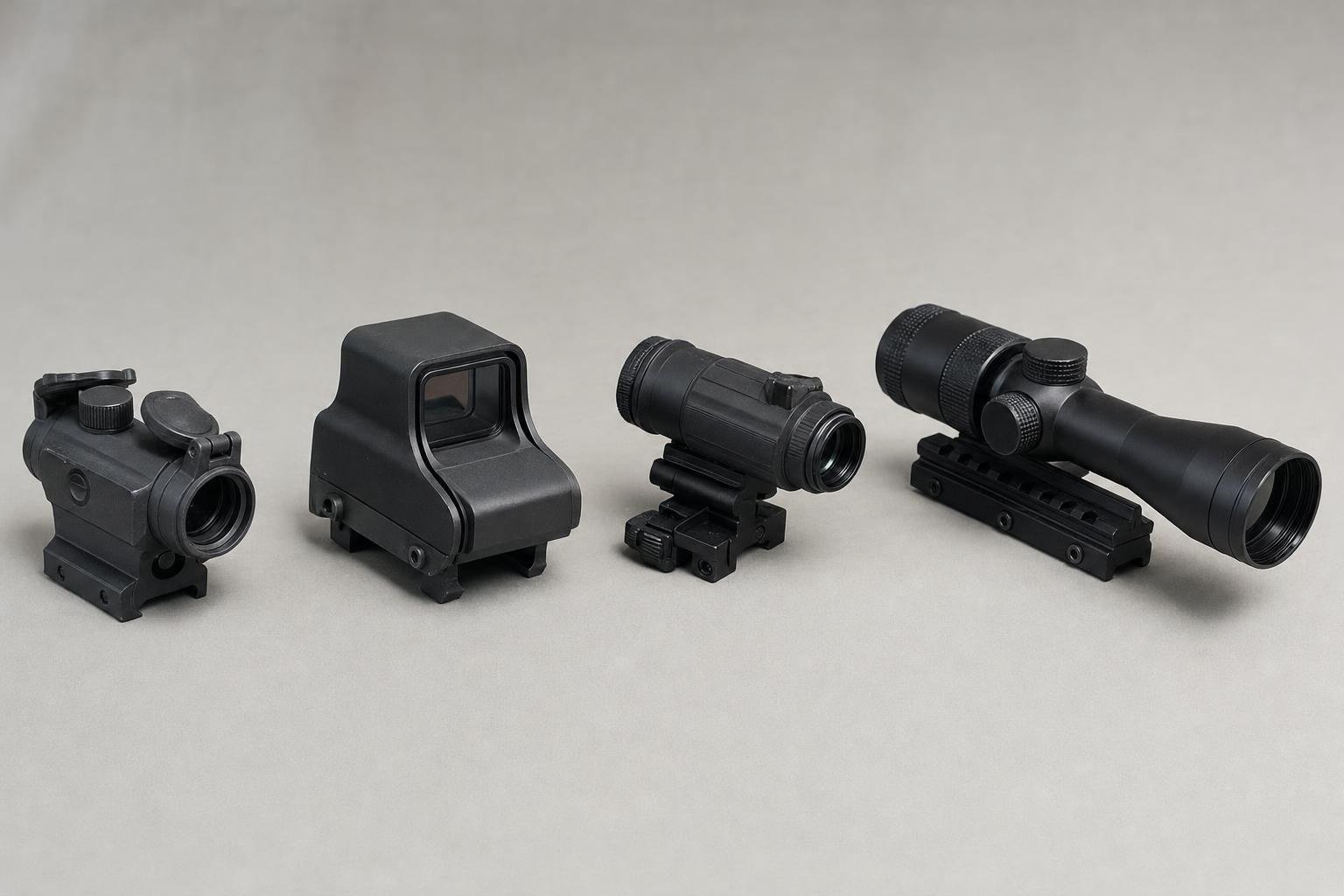
A red dot (or reflex) sight projects an illuminated dot onto a lens. You keep both eyes open, put the dot on the target and shoot. There is no magnification.
- Best for: almost everyone, especially woodland and CQB riflemen.
- Pros: fast, light, simple, affordable, and work at any distance from your eye.
- Types: tube style (enclosed) and open reflex (a single angled window, popular on pistols).
Holographic sights
Real holographic sights use a laser to project a reticle hologram, usually a circle with a dot in the middle. Most airsoft-priced “holographic” sights are actually reflex sights in a holographic-style housing, but they give the same big window and circle-dot reticle.
- Best for: CQB and fast-paced games.
- Pros: large viewing window, the circle reticle is very fast to pick up.
- Cons: bulkier and heavier than a small red dot.
Magnifiers
A magnifier sits behind your red dot or holo and typically gives 3x magnification. Most flip to the side on a mount when you do not need them.
- Best for: open sites, spotting players at range, and milsim.
- Pros: close-range speed of a dot plus the option of magnification.
- Cons: extra weight and rail space.
Scopes and LPVOs
Traditional rifle scopes (for example 3-9x) suit snipers and DMRs. A Low Power Variable Optic (LPVO), such as a 1-4x or 1-6x, works like a red dot at 1x and a scope when zoomed in, making it a versatile choice for DMRs and long-range woodland play.
- Best for: snipers, DMRs, and players who like observing at range.
- Cons: narrower field of view, eye relief matters, and they are slower up close.
Browse the full range in red dot and holographic sights and sights and scopes.
Quick comparison
| Sight | Magnification | Speed | Best for |
|---|---|---|---|
| Iron sights | None | Medium | Simplicity, backup |
| Red dot | None | Very fast | All-rounders, CQB, woodland |
| Holographic | None | Very fast | CQB |
| Red dot + magnifier | 1x / 3x | Fast | Open sites, milsim |
| LPVO | 1x to 4x or 6x | Medium | DMRs, versatile woodland |
| Scope | 3x to 9x+ | Slow up close | Snipers |
Protect your lens
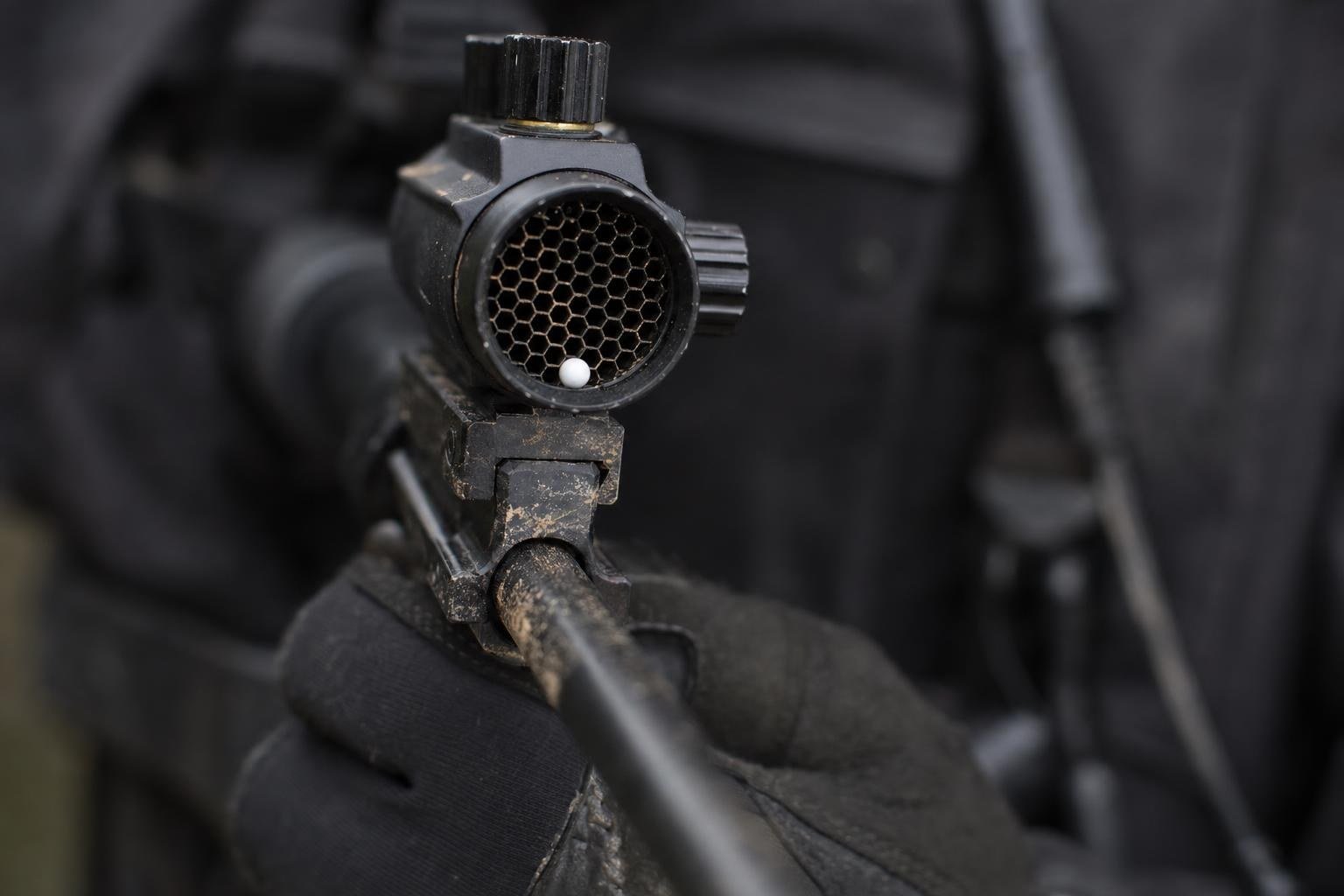
A BB hitting a sight’s front lens at close range can crack or shatter it, especially on replica optics. That can send glass towards your eye protection. Fit a lens protector: a polycarbonate cover or a metal honeycomb mesh, which also reduces glare. Browse lens protectors.
Never rely on a sight as eye protection. Your goggles must always be worn. Some players also use honeycomb “killflash” filters to reduce lens glint, which can give your position away.
Mounting your sight
- Most airsoft guns use a 20mm Picatinny or Weaver rail. Some older or shorter rails need a mount or riser.
- Height matters. You want the sight in line with your eye when your cheek rests comfortably on the stock. A riser mount helps when wearing a full face mask.
- Co-witness: if you have iron sights, “absolute” co-witness puts them in the middle of the dot window, while “lower 1/3” puts them lower so they clutter the view less.
- Eye relief: mount scopes and magnifiers so you see a full picture without pressing your goggles into the eyepiece.
Zeroing in airsoft
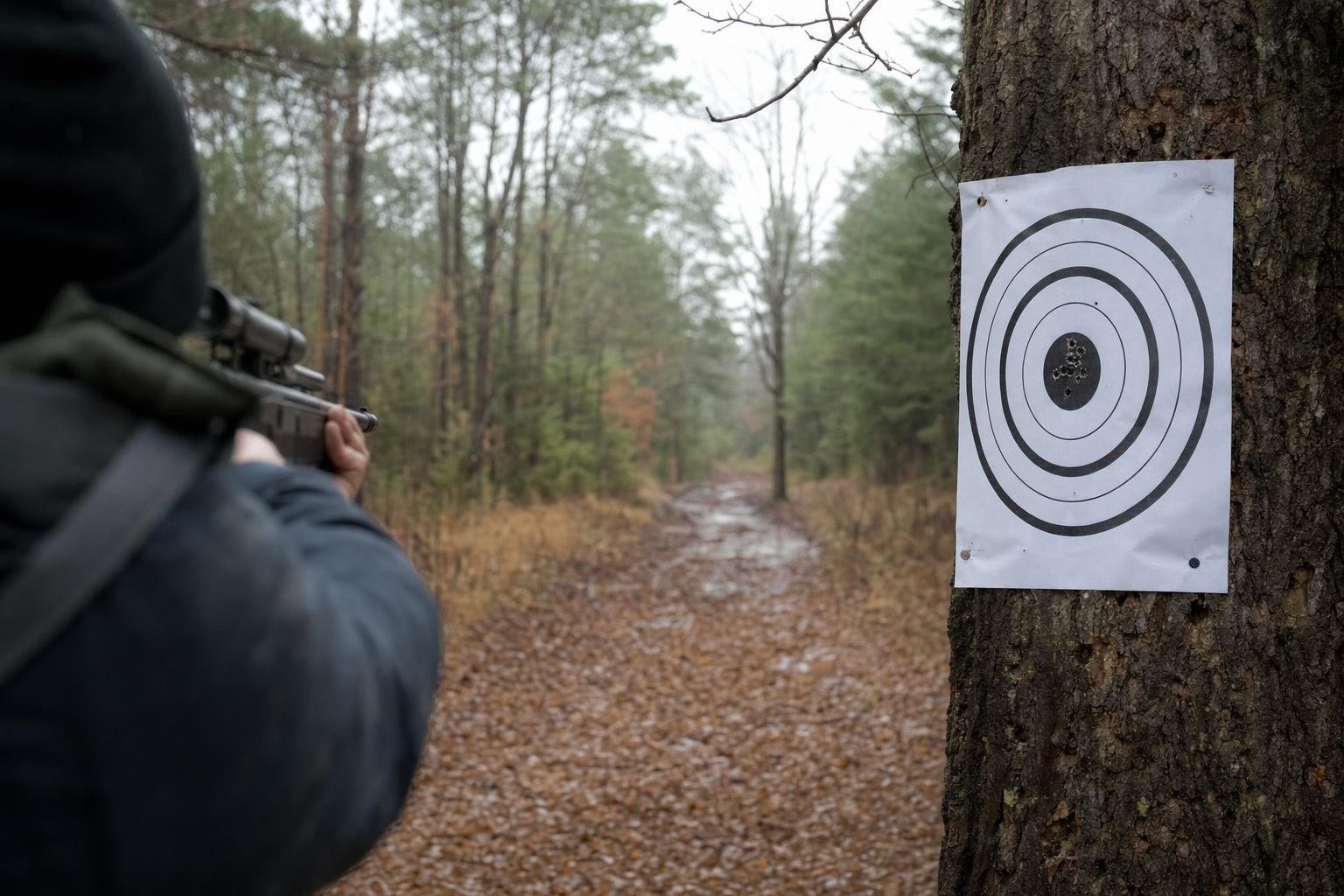
Zeroing means adjusting the sight so the dot matches where your BBs land. In airsoft, always set your hop-up first, then zero. If you change BB weight or hop-up, re-zero.
- Set your hop-up so BBs fly flat to your typical engagement distance. See our hop-up guide.
- Set up a target at around 25 to 35 metres, where most woodland engagements happen.
- Fire groups of five aimed shots on semi-auto.
- Adjust the windage (left/right) and elevation (up/down) turrets to move the dot onto the centre of your group.
- Repeat until the group sits under the dot, then note your settings.
Do this at a site’s test range, or safely at home on private land. Our guide to target practice at home covers setup and safety.
Upgrade your optics
Red dots, holographic sights, scopes, mounts and lens protectors.
Shop red dotsShop lens protectorsFrequently asked questions
What is the best sight for airsoft?
For most players, a red dot sight. It is fast, light, affordable and works well in both woodland and CQB.
Is a holographic sight better than a red dot?
Neither is strictly better. Holographic style sights have a bigger window and fast circle reticle, while red dots are smaller and lighter.
Do I need a lens protector on my airsoft sight?
Yes. A close-range BB hit can crack a lens. A polycarbonate or mesh lens protector prevents this.
Should I use a scope for airsoft?
Scopes suit snipers and DMRs. For general rifle play, a red dot or LPVO is quicker and more practical.
How do I zero an airsoft sight?
Set your hop-up first, then fire groups at 25 to 35 metres and adjust the windage and elevation turrets until the group sits under your dot.