Your First Airsoft Loadout: What to Buy and in What Order
Walk around any airsoft site and you will see players who spent a fortune on kit they never use, and others who look sharp, move well and carry exactly what they need. The difference is usually not budget. It is buying the right things in the right order. This guide gives you that order.
Golden rules before you spend a penny
- Play first. Two or three hire days will teach you more about what you need than any guide.
- Function before fashion. A comfortable, practical setup beats a perfect replica impression.
- Build around your role. A rifleman, support gunner and sniper need different things.
- Pick a colour scheme. Choose one pattern and one solid colour (olive, coyote or ranger green) and stick to them so everything matches.

Priority 1: eye and face protection
This is not optional and never will be. Every UK site requires impact-rated eye protection, and most require lower face protection for under 18s and strongly recommend it for everyone else. A BB to the teeth is an expensive dental bill.
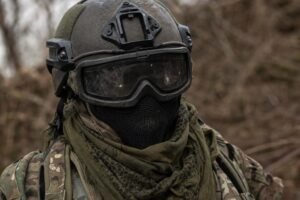
Your options are full-seal goggles, ballistic glasses, or a full face mask. We cover each in detail in our eye and face protection guide. Shop glasses and goggles and masks and face protection.
Priority 2: boots
You will be on your feet for six hours or more, often on wet, uneven woodland ground. Good boots prevent rolled ankles and blisters, and they last for years. Look for:
- Ankle support (mid or high cut).
- Aggressive tread for mud and leaf litter.
- Waterproofing if you play woodland in autumn and winter.
- A proper break-in period before your first game.
See our range of boots and footwear.
Priority 3: clothing
Camouflage clothing helps you blend in and, just as importantly, survives brambles and crawling. A field shirt or UBACS (a combat shirt with breathable body panels for wear under a vest), plus durable trousers, is the foundation. Knee pads make kneeling behind cover far more comfortable.
Not sure which pattern to pick? Our guide to camouflage patterns explains what works in UK woodland. Browse shirts and UBACS, trousers, knee and elbow pads and jackets for winter games.
Priority 4: gloves
Hands are exposed and close to your gun, so they get hit a lot, and knuckle hits really sting. Tactical gloves also protect against brambles and cold. Pick a fit that still lets you work your trigger and magazine release. Shop gloves.
Priority 5: load carriage

You need somewhere to carry magazines, water and a few essentials. There are three main options.
| Option | Pros | Cons | Best for |
|---|---|---|---|
| Chest rig | Light, cool, quick to put on, affordable | Less space for extras | Most beginners, summer, fast moving players |
| Plate carrier | Very modular, carries more, looks the part | Heavier and hotter | Milsim, impressions, players who carry a lot |
| Battle belt | Keeps chest free, great for pistols and dump pouch | Limited capacity alone | Pairing with a rig or carrier, snipers, CQB |
For most new players, a chest rig with three or four magazine pouches is the sweet spot. Browse vests, rigs and plate carriers and belts and harnesses.
Priority 6: pouches
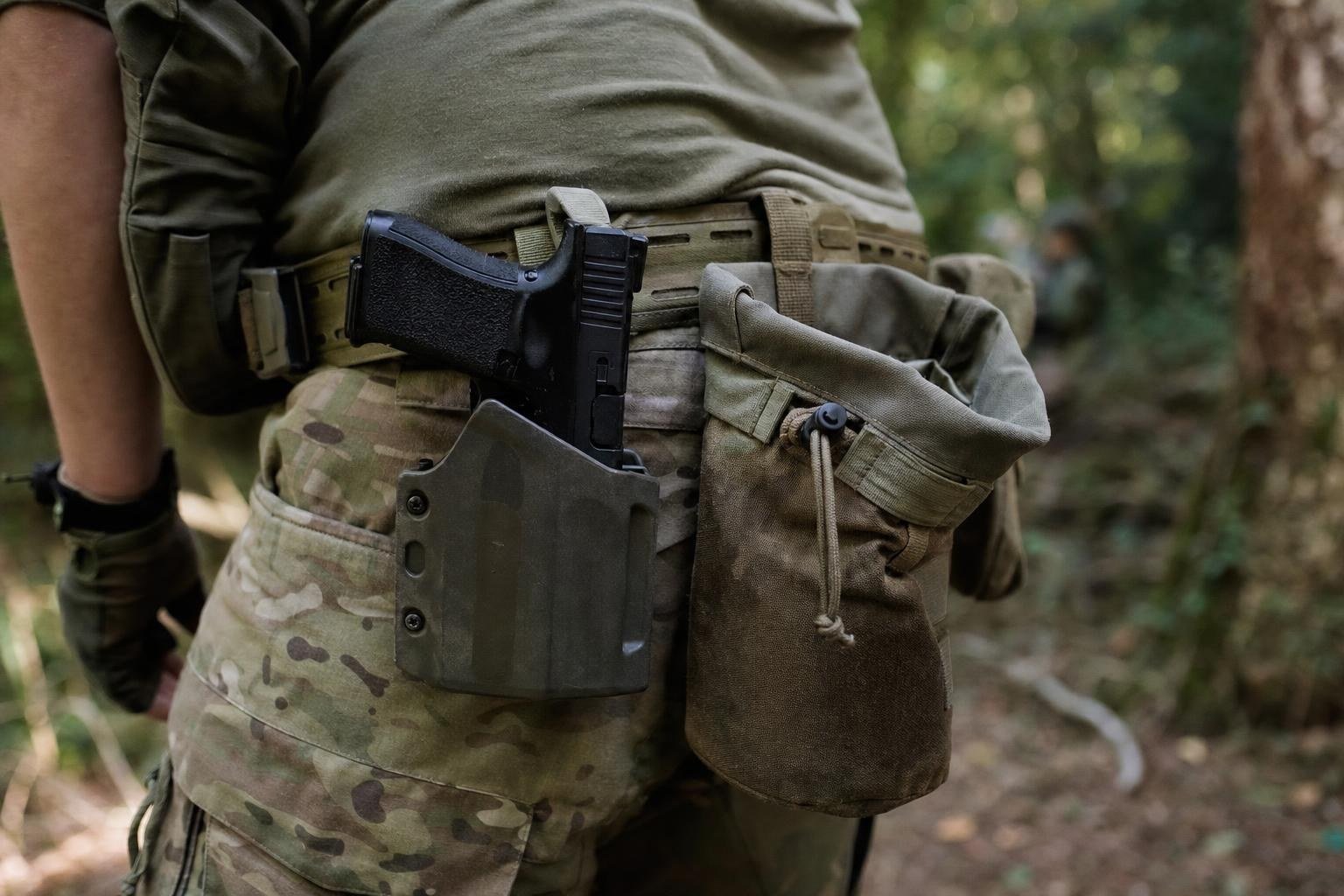
Less is more. A good starting set is:
- Three or four rifle magazine pouches. Mid-cap mags (around 100 to 150 rounds) are standard and some events require them.
- A dump pouch for empty mags, so you do not lose them in the undergrowth.
- A small utility or admin pouch for a phone, snack, spare BBs and a first aid kit.
- A pistol holster if you run a sidearm.
Find all of these in our pouches and holsters ranges.
Priority 7: hydration
Dehydration ruins more game days than anything else, even in the UK. A hydration bladder in a pouch or small pack lets you drink without stopping. Two litres is about right for a full day. See hydration systems.
Priority 8: helmet
Helmets protect against knocks from low branches and CQB doorframes, keep BBs off your head, and give you a platform for a light, camera or comms. A simple bump helmet is plenty. Shop helmets and accessories.
Priority 9: the extras that make a difference
- A radio: team comms transform how you play. Check site rules on frequencies and licensing first. See radio gear.
- A sling: lets you transition to your pistol or rest your arms. See slings and lanyards.
- A backpack for spares, food and a waterproof. See backpacks.
- Patches: a team or morale patch adds personality. See patches.
Example beginner loadouts
The woodland rifleman
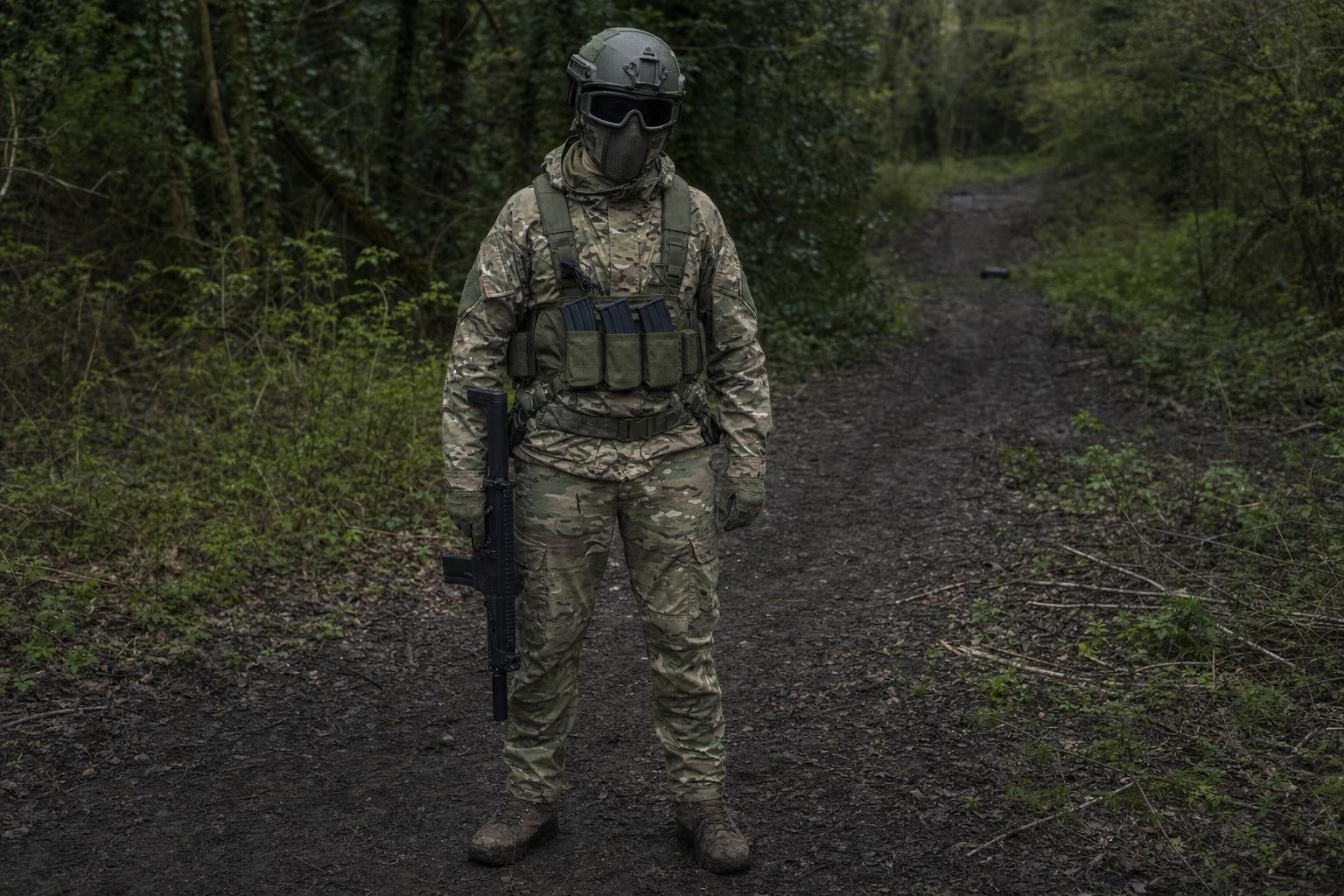
Full-seal goggles and mesh lower face, MTP or Flecktarn shirt and trousers, waterproof boots, olive chest rig with four mag pouches, dump pouch, two-litre hydration, gloves and a bump helmet. Light, practical and blends into most UK woodland.
The CQB player
Full face mask, dark or urban clothing, knee pads, a slim chest rig or low-profile plate carrier, battle belt with pistol holster and dump pouch, and a weapon light. Indoors, mobility and protection matter more than camouflage.
The budget starter
Goggles and mesh, ex-military surplus clothing, a basic chest rig, gloves and decent boots. Everything else can wait until you have more games under your belt.
Remember: if you are buying your first gun as well, check our guide to UK airsoft law to understand the difference between RIFs and two-tones.
Start building your loadout
Everything you need, from protection and boots to rigs, pouches and hydration.
Shop rigs and carriersShop pouchesFrequently asked questions
What should I buy first for airsoft?
Eye and face protection, then boots. These keep you safe and comfortable while you play on hire kit and work out what else you need.
Do I need a plate carrier for airsoft?
No. A chest rig is lighter, cheaper and does the same job for most players. Plate carriers suit milsim and players who carry a lot of kit.
How many magazines do I need for airsoft?
Three to five mid-cap magazines is plenty for most skirmish days, and some milsim events limit you to a set number of mid-caps.
What camo should I wear for airsoft in the UK?
Woodland patterns such as MTP, MultiCam, Flecktarn or M81 work well at most UK woodland sites. Check whether your site uses team colours or armbands.
Do I need a helmet for airsoft?
Not usually required, but a bump helmet is a sensible addition, especially for CQB and woodland with low branches.