
Military Camouflage Patterns Explained: MTP, MultiCam, Woodland, Flecktarn and More
Camouflage is one of the most recognisable parts of military life, and one of the first decisions every airsoft player makes. But why do some patterns use blobs while others use pixels, and why did the British Army abandon a pattern it used for 40 years? Here is a guide to the world’s most famous camouflage patterns, and which ones work best on UK airsoft sites.
How camouflage works
The British Army teaches soldiers why things are seen using a simple checklist: shape, shine, shadow, silhouette, surface, spacing and movement. Good camouflage deals with several of these at once. It uses colours that match the environment, but more importantly it uses disruptive shapes that break up the outline of the human body, so the eye does not recognise a person.
Modern patterns also play with scale. Large shapes break up your outline at a distance, and small details blend you into the texture up close. Getting both right is the challenge every designer faces.
DPM: the British classic

Disruptive Pattern Material (DPM) was introduced by the British Army in the 1960s and, through several updates, remained in service until 2011. Its green, brown, black and khaki brushstroke-style shapes became iconic, and versions were adopted by dozens of countries. A desert DPM version was used in the Gulf War and Iraq.
DPM works well in temperate European woodland, and it has had a big revival among airsoft players who love its retro look and the cheap supply of ex-military surplus.
MTP: the current British pattern
Multi-Terrain Pattern (MTP) replaced DPM after the campaign in Afghanistan, where soldiers moved between green zones, desert and urban areas in a single patrol and needed one pattern that would cope with all of them. Introduced in 2010, MTP is based on MultiCam colours combined with shapes drawn from DPM. It is now standard across the British armed forces.
MTP is one of the most versatile patterns for UK airsoft. It works in woodland, open fields and urban sites, and it is the obvious choice for British Army inspired loadouts.
MultiCam: the multi-environment pattern
Developed by the American company Crye Precision and launched in the early 2000s, MultiCam was designed to work across a wide range of environments, seasons and lighting by using gradients of colour rather than hard-edged blobs. The US Army adopted it for Afghanistan in 2010, and a closely related pattern, OCP, became the standard US Army uniform from 2015.
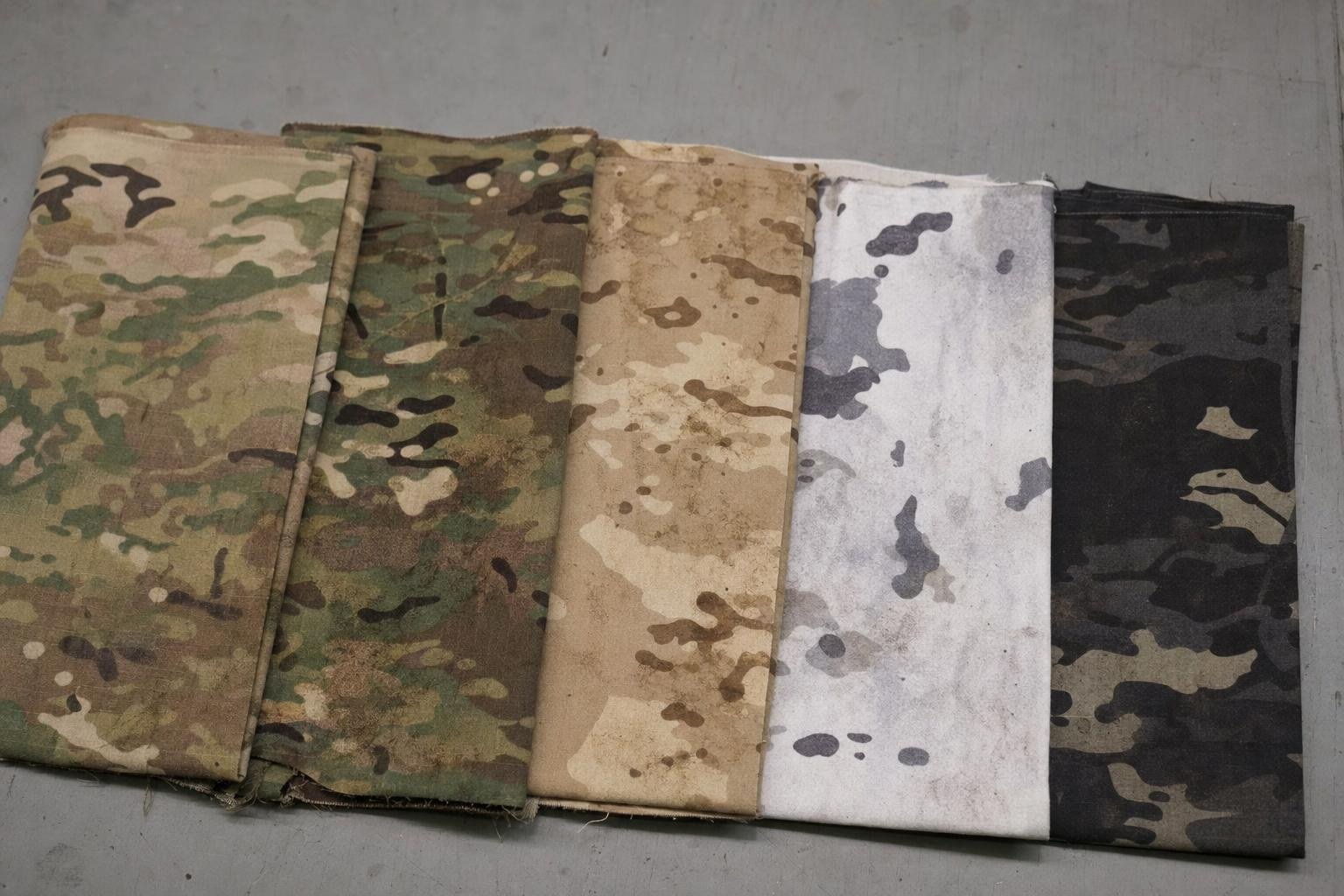
MultiCam has since grown into a family of patterns:
- MultiCam Tropic: lush greens for dense jungle and summer woodland.
- MultiCam Arid: sandy tones for desert and dry ground.
- MultiCam Alpine: white and grey for snow.
- MultiCam Black: designed for law enforcement and night operations, and very popular for CQB airsoft.
M81 Woodland: the Cold War icon
The US M81 Woodland pattern, introduced in 1981, used large, bold blobs of green, brown, sand and black. It was the standard US camouflage for more than two decades and was widely copied around the world, so it is one of the most recognisable patterns ever made. M81 is affordable, very effective in green summer woodland, and perfect for 1980s and 1990s impressions.
Flecktarn: the German dot pattern
Germany’s Flecktarn (literally “spot camouflage”) was developed in the 1970s and adopted by the Bundeswehr in 1990. Its five colours are arranged in small, overlapping dots that create a dappled effect very similar to light through leaves. Many people consider Flecktarn one of the most effective woodland patterns ever made, and its desert cousin, Tropentarn, is equally well known.
For UK woodland sites, especially in spring and summer, Flecktarn is hard to beat, and the supply of German surplus makes it very good value.
Digital patterns: MARPAT and UCP
In the early 2000s, militaries began experimenting with pixelated or “digital” camouflage. The US Marine Corps’ MARPAT, introduced in 2002, was a success: its small square pixels mimic natural texture at close range while forming larger shapes at distance.
The US Army’s Universal Camouflage Pattern (UCP), adopted in 2004, is a famous cautionary tale. Designed to work everywhere, its grey-green tones worked well almost nowhere, and it was replaced by OCP from 2015. It shows that “universal” camouflage is extremely difficult to get right.
Other famous patterns
| Pattern | Origin | Notes |
|---|---|---|
| Tiger Stripe | Vietnam War era | Horizontal stripes, iconic with special forces of the period |
| ERDL / Leaf | USA, 1960s | Predecessor of M81 Woodland |
| CADPAT | Canada, 1990s | One of the first digital patterns in service |
| AOR1 / AOR2 | US Navy special warfare | Digital desert and woodland patterns |
| Kryptek | Commercial | Layered scale-like pattern popular with hunters and airsoft players |
| Wz.93 Pantera | Poland | Polish woodland pattern, popular for GROM impressions |
Choosing camo for UK airsoft
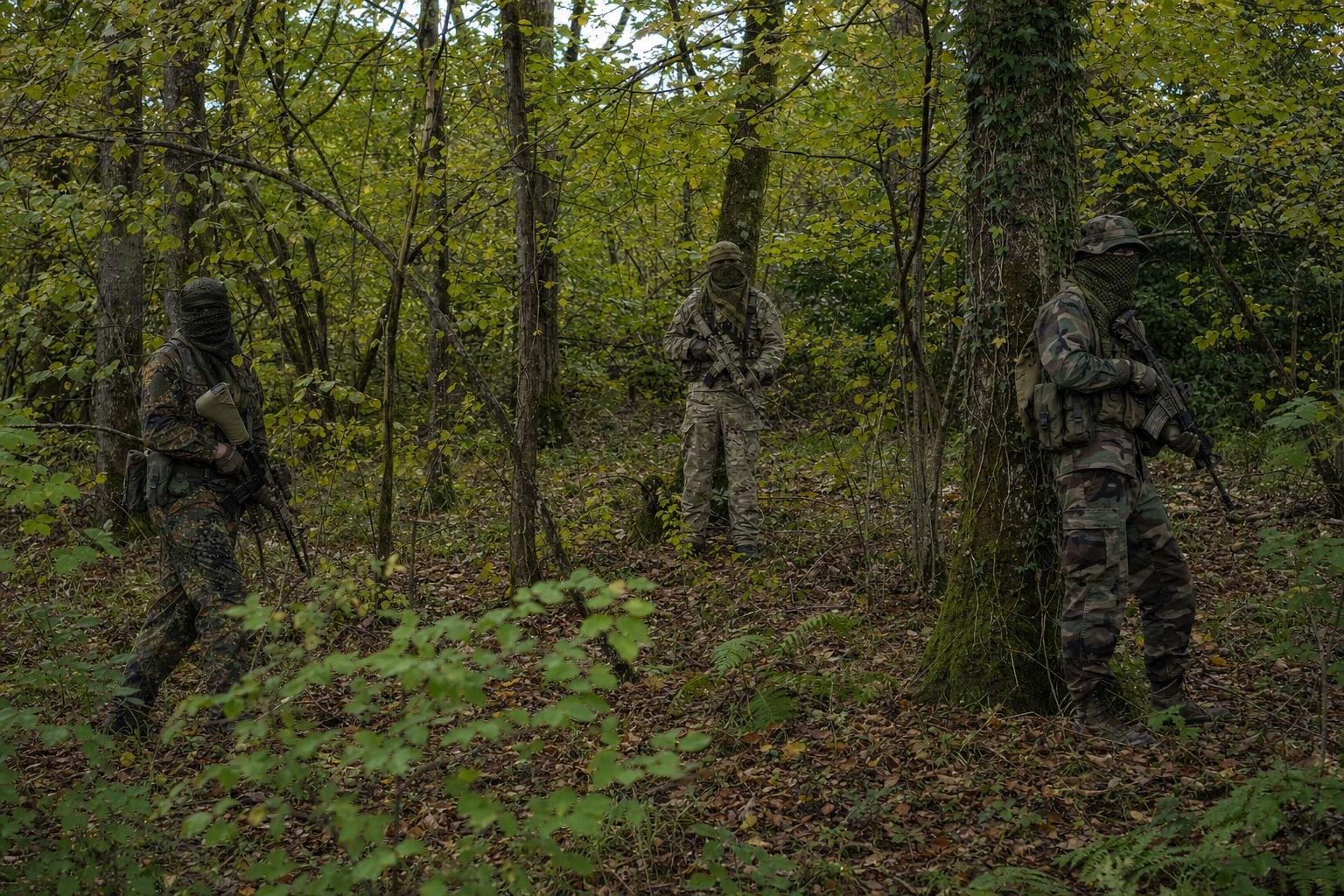
The best pattern is the one that matches where you play most. Here is a quick guide for UK sites:
| Site type | Recommended patterns |
|---|---|
| Woodland, spring and summer | Flecktarn, M81 Woodland, MultiCam Tropic, DPM |
| Woodland, autumn and winter | MTP, MultiCam, solid coyote or ranger green |
| Mixed or open sites | MTP, MultiCam |
| CQB and urban | MultiCam Black, solid black, grey or urban patterns |
| Milsim impressions | Whatever matches the unit and era you are recreating |
Tips that matter more than pattern: match your gear to your clothing, break up the black of your rifle (see our spray painting guide), cover your face and hands, and remember that movement gives you away faster than any pattern. For ultimate concealment, see how to make a ghillie suit.
Also check whether your site uses team colours or requires certain patterns for each side. Some sites run “camo versus camo” days, while others simply use armbands.
Ready to pick your pattern? Browse our airsoft clothing, camouflage sets, shirts and UBACS and trousers, and finish the look with matching hats and caps and scarves and balaclavas.
Find your pattern
MTP, MultiCam, Flecktarn, Woodland and more, across clothing, camo sets and accessories.
Shop camo setsShop clothingFrequently asked questions
What camouflage does the British Army use?
The British Army uses MTP (Multi-Terrain Pattern), which replaced DPM from 2010. MTP combines MultiCam colours with shapes drawn from DPM.
What is the difference between MTP and MultiCam?
MTP uses a very similar colour palette to MultiCam but with shapes adapted from British DPM. They look alike and work in similar environments, so they are often worn together in airsoft.
What is the best camouflage for UK woodland?
Flecktarn, M81 Woodland and DPM work superbly in green summer woodland, while MTP and MultiCam are better all-rounders through the autumn and winter months.
Why did the US Army stop using UCP?
UCP was designed to work in every environment but performed poorly in most of them, particularly in Afghanistan. It was replaced by the MultiCam-based OCP pattern from 2015.
Can I mix camo patterns in airsoft?
Yes. Mixing patterns, especially with solid colours, can actually break up your outline. Just check your site’s rules on team identification.