Top 5 Main Battle Tanks in the World
The main battle tank remains the centrepiece of most modern armies, even as drones and anti-tank missiles change the battlefield. So which tanks are the best in the world right now? There is no single right answer, but here is our pick of the five most capable main battle tanks in service today, and what makes each one stand out.
How we ranked them: we looked at the balance of firepower, protection, mobility, electronics and real-world service record. Many details about modern armour are classified, so specs are approximate and based on publicly available information. Rankings like this are always up for debate, and that is half the fun.
What makes a great tank?
Tank designers talk about three classic qualities: firepower, protection and mobility. Increase one and you usually sacrifice another, because more armour means more weight, and more weight means less speed. Modern tanks add a fourth quality that is now just as important: electronics, including thermal sights, networked battle management systems, and active protection systems (APS) that can detect and shoot down incoming missiles.
Leopard 2A8 (Germany)
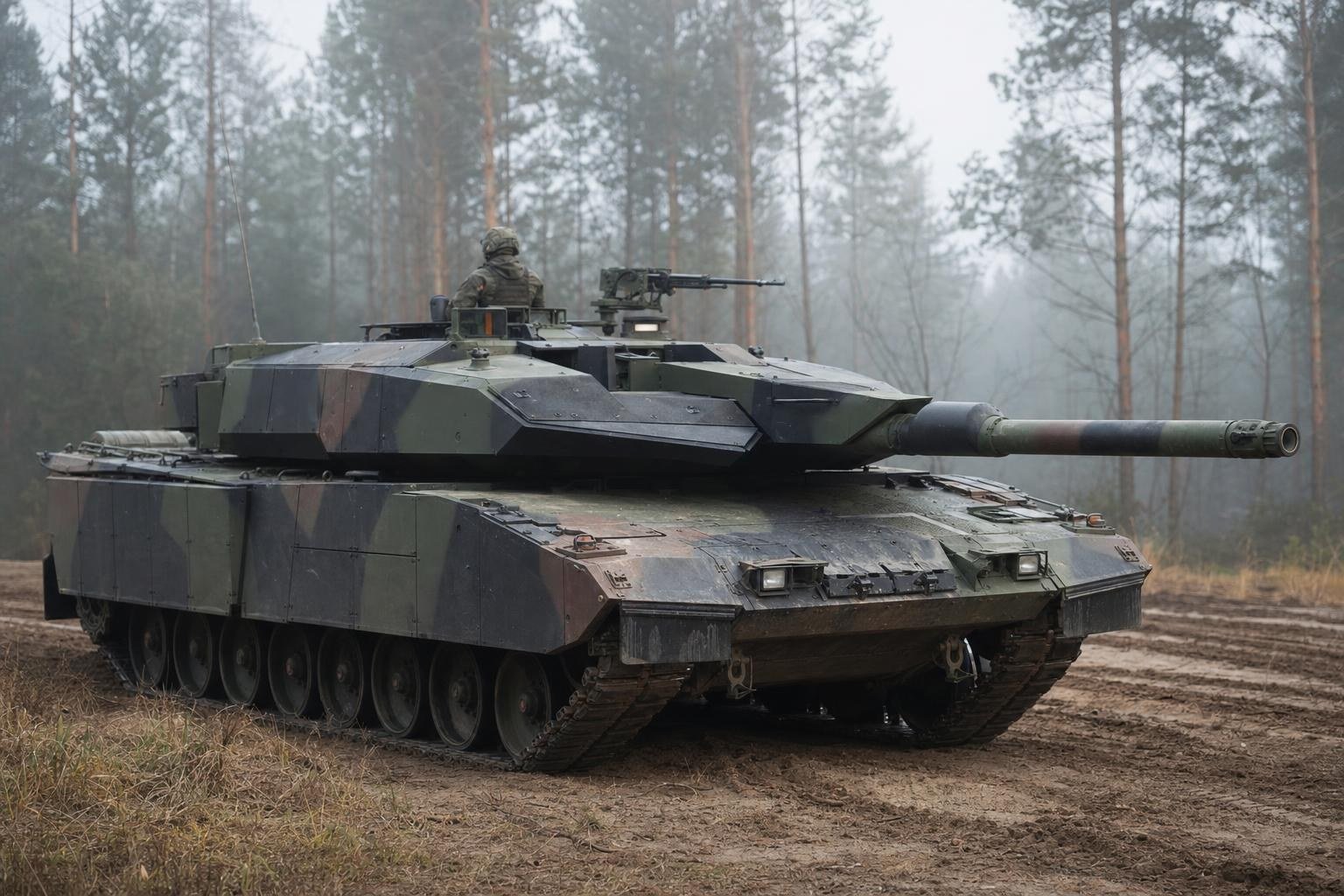
The Leopard 2 is arguably the most successful Western tank of the modern era. First entering service with West Germany in 1979, it has been continually upgraded and is now used by more than a dozen armies, from Canada to Singapore. That huge user base means strong support, spare parts and training.
The latest 2A8 variant adds improved armour, the Israeli-designed Trophy active protection system, and upgraded sights and electronics. Its long-barrelled 120mm smoothbore gun is among the most accurate in the world, and the Leopard has always been known for excellent mobility thanks to its powerful diesel engine. Several European nations, including Germany, Norway, the Czech Republic and the Netherlands, have ordered the 2A8, cementing the Leopard’s place at the top.
M1A2 SEPv3 Abrams (United States)
The Abrams has been the backbone of US armoured forces since 1980 and has seen combat from the Gulf War of 1991 onwards. Its most unusual feature is its gas turbine engine, which gives superb acceleration and a distinctive whine, at the cost of very high fuel consumption.
The SEPv3 upgrade brings improved armour, better power generation for electronics, upgraded thermal sights, a new ammunition data link for programmable rounds, and integration of the Trophy active protection system. The Abrams’ armour, which includes depleted uranium layers in US Army versions, is widely regarded as among the best protected in the world. Its main drawbacks are weight and fuel use, which make logistics demanding.
K2 Black Panther (South Korea)
The K2 Black Panther is one of the most technologically advanced tanks ever built. It uses an autoloader, which allows a three-person crew and a smaller, lighter turret, while still carrying the same powerful 120mm gun as its Western rivals.
Its standout feature is hydropneumatic suspension, which lets the K2 raise, lower and tilt its hull. That means it can “kneel” to hide behind a ridge, or lean back to aim its gun higher or lower than a conventional tank could. Combined with an advanced fire control system and a soft-kill active protection suite, the K2 is a formidable machine. Poland’s large order for K2s, including locally built versions, has made it a serious player in Europe.
Challenger 3 (United Kingdom)
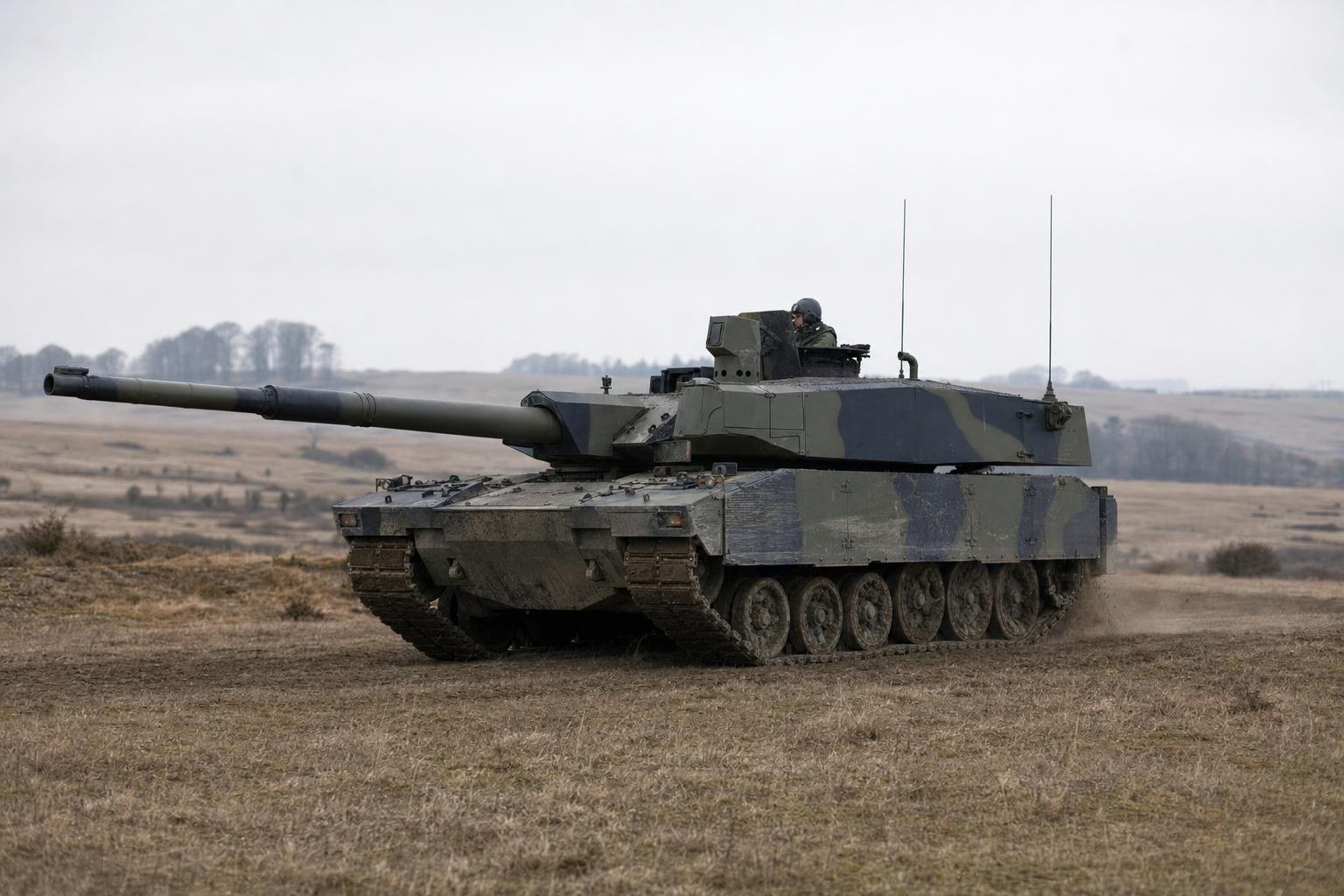
Britain’s Challenger 2 had a famous reputation for protection. In decades of service, including the 2003 Iraq War, very few were knocked out by enemy fire. But its rifled 120mm gun was unique among NATO tanks, which meant it could not share ammunition with allies.
Challenger 3 fixes that. Built by Rheinmetall BAE Systems Land by upgrading existing Challenger 2 hulls, it receives a new turret with a 120mm smoothbore gun compatible with NATO ammunition, modern thermal sights for commander and gunner, a new generation of armour, and the Trophy active protection system. It keeps the traditional British strengths of protection and crew survivability, while becoming far more capable and interoperable with allies. Mobility is its weakest area on paper, but it is a big leap forward for the British Army.
Merkava Mk4 (Israel)
The Merkava is unlike any other tank on this list. Designed around one priority above all, crew survival, it places the engine at the front of the hull, so the engine block acts as extra protection for the crew behind it. That layout also allows a rear door, so the crew can exit under cover, and the space can carry infantry, a stretcher or extra ammunition when needed.
The Merkava Mk4 was also the first tank in the world to enter service with an active protection system (Trophy, from 2011), and it has extensive combat experience. It is designed for Israel’s specific needs rather than for export, which is why you rarely see it compared directly with the others, but it remains one of the best protected tanks on earth.
Side by side
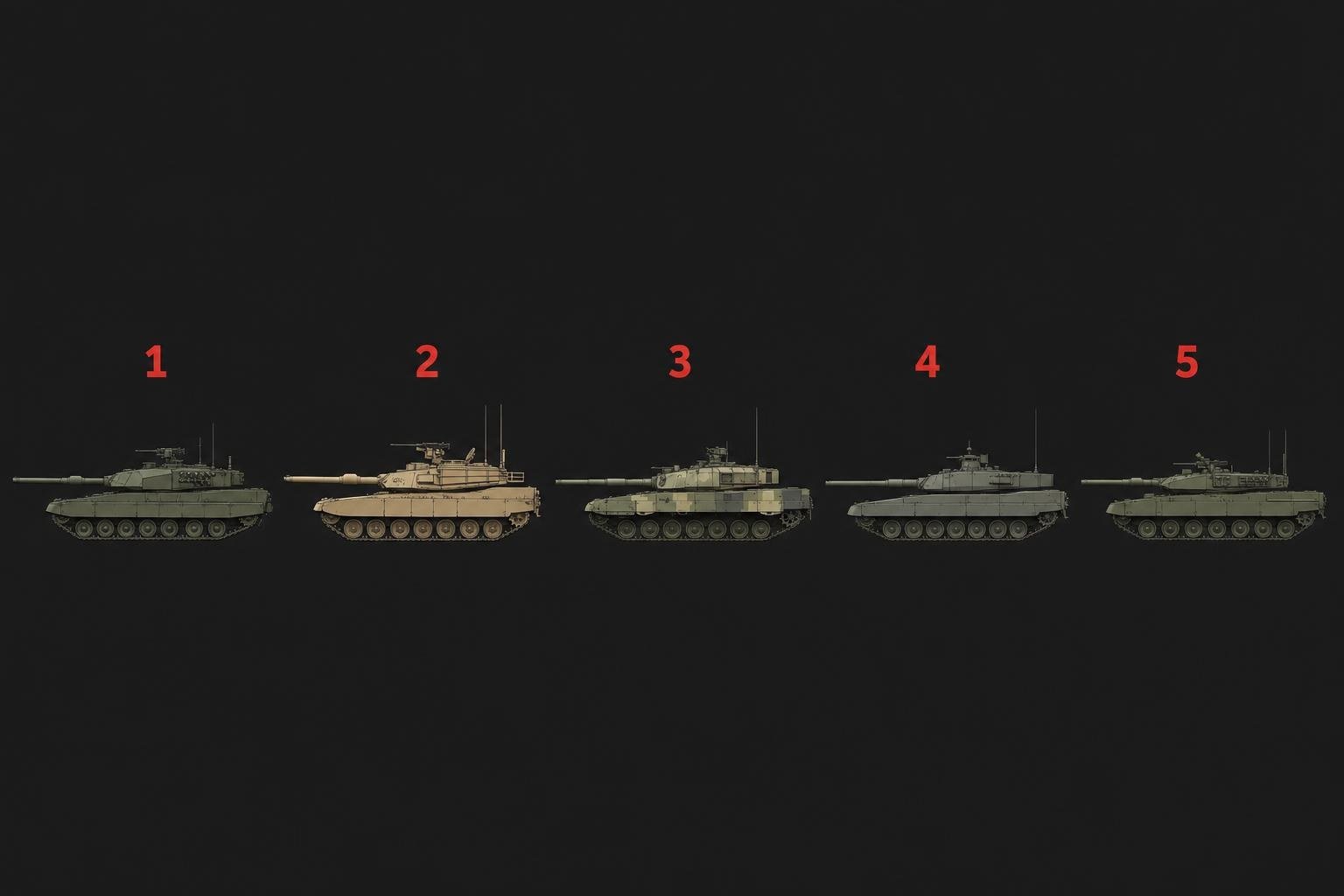
| Tank | Country | Crew | Weight | Strength |
|---|---|---|---|---|
| Leopard 2A8 | Germany | 4 | ~66t | All-round balance, huge user base |
| M1A2 SEPv3 Abrams | USA | 4 | ~67t | Armour, combat record |
| K2 Black Panther | South Korea | 3 | ~55t | Technology, adjustable suspension |
| Challenger 3 | UK | 4 | ~66t | Protection, crew survivability |
| Merkava Mk4 | Israel | 4 | ~65t | Front engine layout, combat proven APS |
Honourable mentions
- Leclerc (France): fast, compact and fitted with an autoloader. Being upgraded to the XLR standard.
- Type 10 (Japan): light at around 44 tonnes, with advanced networking and modular armour.
- T-90M (Russia): Russia’s most modern tank in widespread service, with extensive recent combat use.
- Altay (Turkey): a new generation design built with Korean help, entering service in the mid-2020s.
The future of the tank
Recent conflicts have shown that tanks are vulnerable to drones, top-attack missiles and mines. The answer emerging across the world is not to abandon the tank, but to add active protection, drone defence, better situational awareness and closer cooperation with infantry. Next-generation projects such as the Franco-German MGCS are expected to arrive in the 2040s.
Bring a bit of armour to your kit
If you love military history and hardware, you will find plenty to enjoy in our morale patches, flags and military gifts. And for the full military look on the field, see our guide to military camouflage patterns.
For the military enthusiast
Patches, flags and gifts for anyone who loves military history.
Shop patchesShop giftsFrequently asked questions
What is the best tank in the world?
There is no single answer, but the Leopard 2A8 is often rated the best all-rounder thanks to its balance of firepower, protection, mobility and wide international use.
What tank does the British Army use?
The British Army is transitioning from the Challenger 2 to the Challenger 3, an upgrade with a new smoothbore gun, sights, armour and active protection.
What is an active protection system?
An APS uses radar and sensors to detect incoming missiles or rockets and defeat them, either by jamming or by firing a countermeasure to destroy them before impact. Trophy is the best known example.
Why does the Merkava have its engine at the front?
To add an extra layer of protection for the crew and to allow a rear door for safe exit and carrying extra people or supplies.
How heavy is a modern tank?
Most Western main battle tanks weigh between 55 and 70 tonnes, roughly the weight of five empty double-decker buses.